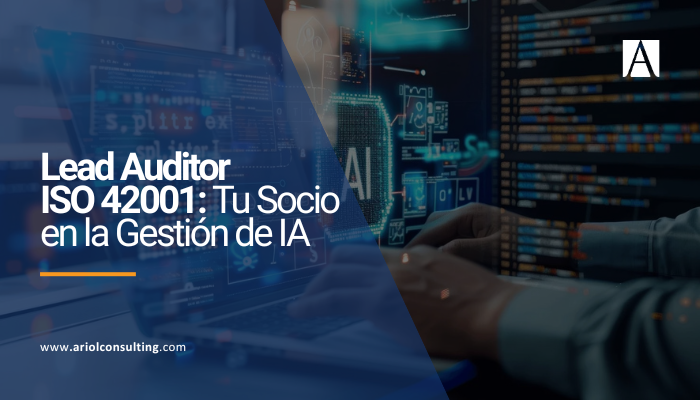
ISO 42001:2023 – The Global Standard for the Responsible Management of Artificial Intelligence (AI)
ISO 42001:2023 is the first international management systems standard dedicated exclusively to artificial intelligence (AI). In response to the rise of AI and the potential for its application in various sectors, the standard sets out clear guidelines to ensure that AI systems are safe, transparent, ethical and accountable. In a context where AI is playing an increasingly important role in areas such as healthcare, autonomous vehicles, industrial automation and other sectors, ISO 42001 emerges as a key tool for managing the risks and maximizing the benefits of these technologies
What is ISO 42001 and why is it relevant to your company?
ISO 42001 is the first global standard that provides a framework for managing AI systems in an ethical and responsible manner. Its implementation enables organizations to ensure that the AI systems developed and used in their operations are reliable, transparent and comply with fundamental ethical principles such as fairness, non-discrimination and respect for privacy. It also provides a structured approach to identify, mitigate and manage risks associated with AI, such as algorithmic biases, lack of transparency in AI models or negative impacts on individuals.
The increasing use of AI in organizations brings with it the need to establish clear control mechanisms. Without proper regulation, AI systems could give rise to significant problems, both socially and economically. ISO 42001 helps to mitigate these risks and optimize the positive impact of AI.
Objectives of ISO 42001:2023:
- Promote the development and responsible use of AI: Encourages the creation of reliable, transparent and accountable AI systems.
- Ethics and transparency: Ensures that systems are fair and non-discriminatory, respecting the rights of individuals and promoting privacy.
- Risk management: Helps identify and mitigate risks associated with AI implementation, such as algorithmic biases and data security.
- Human well-being and safety: Prioritizes safety, well-being and user experience in the design and use of AI systems.
- Regulatory compliance: Facilitates compliance with laws and regulations, including personal data protection regulations.
Why does your company need an ISO 42001 Lead Auditor?
Implementing ISO 42001 in your organization is not just a matter of complying with a standard, but of ensuring that AI systems operate under the highest principles of accountability and ethics. To achieve this, an ISO 42001 Lead Auditor is essential. This expert has the ability to assess, verify and certify that your company’s IA systems meet the requirements of the standard, helping to ensure their proper functioning and effective risk management.
Key functions of an ISO 42001 Lead Auditor:
- Compliance assessment:Verifies that IA processes and systems comply with the requirements established by ISO 42001, ensuring alignment with international best practices.
- Risk identification: Detects potential risks related to AI implementation, such as bias in algorithms, data security and privacy.
- Preparation for external audits: Helps prepare your organization for external certification audits, making it easier to obtain certification.
- Process optimization: Recommends improvements to AI management processes to maximize efficiency, transparency and accountability.
Importance of an ISO 42001 Lead Auditor for your company:
Having an ISO 42001 Lead Auditor will not only help you comply with regulatory requirements, but will also strengthen the confidence of your customers, suppliers and strategic partners. ISO 42001 certification demonstrates your company’s commitment to the responsible use of AI, strengthening your reputation and increasing your competitiveness in the marketplace.
The path to ISO 42001 certification:
ISO 42001 certification requires a comprehensive approach and the implementation of an Artificial Intelligence Management System (AIMS) within the organization. This system must be aligned with organizational processes and be able to address risks in a systematic way.
Steps to obtain certification:
- Initial assessment: Identify the AI systems used in the organization and their potential impact.
- Establish clear policies: Develop AI use policies that prioritize ethics, transparency and accountability.
- Risk management: Implement a risk-based approach to manage potential AI-related risks.
- Review and continuous improvement: Establish monitoring and review processes to ensure that AI systems remain safe and ethical over time.
Having an ISO 42001 Lead Auditor at every step of this process will ensure that your organization meets regulatory requirements and maximizes the benefits of IA.
How can Ariol Consulting help to implement ISO 42001?
At Ariol Consulting, we have a team of experts in the implementation of ISO 42001. If your company is looking to become certified to this standard or to ensure that you are complying with international requirements, we can help you every step of the way.
We offer:
- Initial assessment: We analyze the current state of your IA management and develop an action plan to meet the requirements of the standard.
- Education and training: We train your team to ensure that everyone understands the ethical and technical principles behind ISO 42001.
- Internal audit: We conduct internal audits to ensure your IA system is aligned with the standard prior to external certification.
Contact us today to start implementing ISO 42001 in your organization and ensure responsible and ethical use of artificial intelligence.
Contact
Do you need information?